
What Is Limiting in Audio? The Science Behind Loudness Without Clipping / Online Mixing and Mastering
What Is a Limiter?
A limiter is a specialized form of compressor with an extremely high ratio.
While a traditional compressor may use ratios such as:
2:1
4:1
8:1
a limiter typically operates at ratios approaching:
20:1
50:1
∞:1
At these ratios, signals attempting to exceed a defined threshold are prevented from rising any further.
In practical terms:
A limiter creates a ceiling that audio peaks cannot cross.
When a peak exceeds this ceiling, the limiter automatically reduces its level.
This prevents clipping and allows engineers to raise the average loudness of a track.
Why Limiting Exists
Every digital audio system has a maximum level:
0 dBFS (Decibels Full Scale)
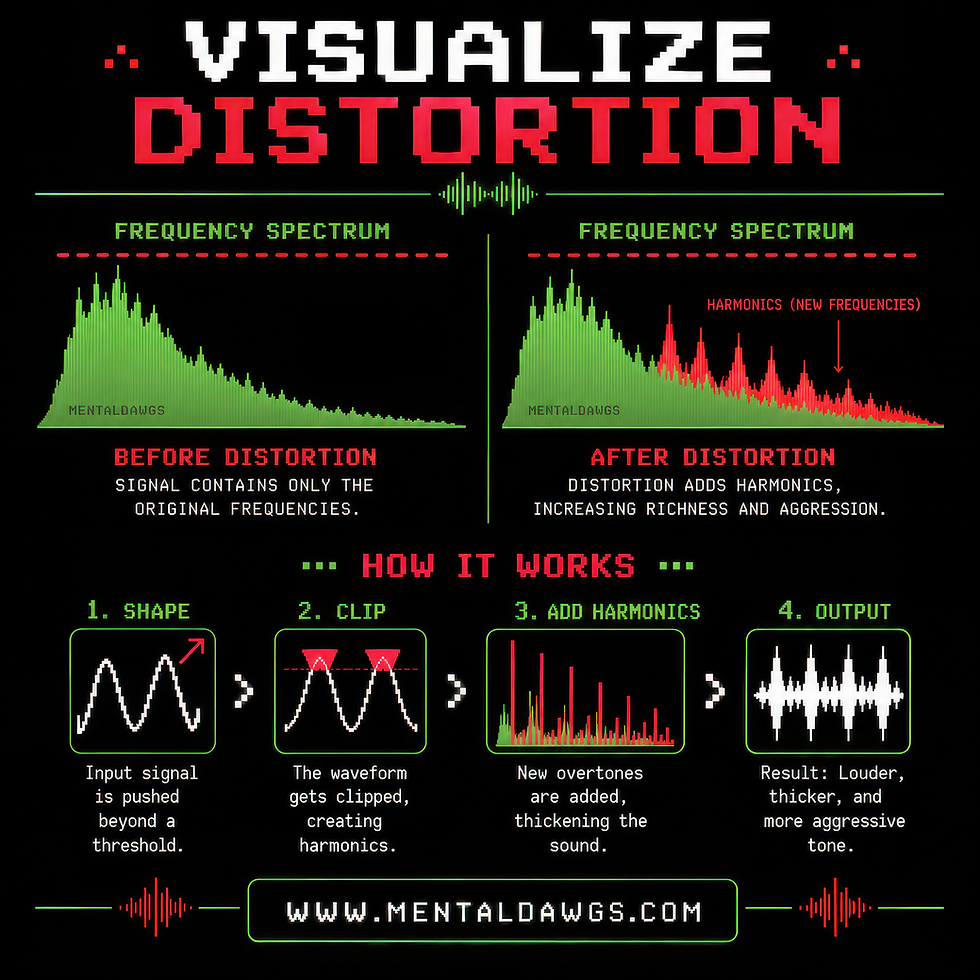
Any signal exceeding this limit cannot be represented accurately and will clip.
When clipping occurs:
waveforms are truncated
distortion is introduced
harsh artifacts become audible
playback quality deteriorates
Limiting was developed as a way to maximize loudness while keeping peaks safely below 0 dBFS.
Without limiting, modern commercial masters would either:
clip aggressively
or sound significantly quieter
than competing releases.
Understanding Peaks and Average Loudness
One of the most important concepts in mastering is the difference between:
Peak Level
The highest instantaneous amplitude of a signal.
Average Loudness [ we provide professional online mixing and mastering services ]
The perceived loudness over time.
A song can have:
very high peaks
relatively low average loudness
This creates a large dynamic range.
A limiter reduces extreme peaks, allowing the overall signal to be amplified afterward.
The result is:
higher average loudness
controlled peak levels
more consistent playback
without necessarily making the music sound distorted.
How Limiting Works
A limiter continuously analyzes incoming audio.
When a signal approaches the ceiling:
Step 1: Detection
The limiter detects peaks that exceed the threshold.
Step 2: Gain Reduction
The limiter instantly reduces the level of those peaks.
Step 3: Output Control
The resulting signal remains below the ceiling while maintaining greater overall loudness.
This process can occur in fractions of a millisecond.
Modern digital limiters are capable of reacting so quickly that clipping can be prevented before it becomes audible.
What Is the Ceiling?
The ceiling defines the maximum output level allowed by the limiter.
Common mastering ceiling settings include:
-0.1 dBTP
-0.3 dBTP
-1.0 dBTP
The ceiling is usually measured in:
True Peak (dBTP)
rather than simple sample peaks.
This distinction is important because digital-to-analog converters can create peaks between samples that exceed the displayed sample level.
These are known as:
Inter-Sample Peaks
True Peak limiting helps prevent these hidden peaks from causing distortion during playback.
What Is Lookahead?
One reason modern limiters are so effective is a feature called:
Lookahead
Lookahead temporarily delays the output signal by a few milliseconds.
This allows the limiter to "see" incoming peaks before they reach the output.
Because the limiter knows a peak is approaching, it can apply gain reduction smoothly and transparently.
Without lookahead:
clipping becomes more likely
distortion increases
limiting becomes more audible
Most modern mastering limiters rely heavily on lookahead technology.
Threshold and Gain Reduction
The threshold determines when limiting begins.
Lowering the threshold causes more of the signal to exceed it, resulting in greater gain reduction.
For example:
If a peak reaches:
-2 dBFS
and the threshold is set to:
-6 dBFS
the limiter will reduce that peak to keep it under control.
The amount of reduction applied is displayed as:
Gain Reduction (GR)
Most transparent mastering situations typically involve:
1 dB to 3 dB of gain reduction
More aggressive genres may require:
4 dB to 6 dB
or occasionally more.
Excessive gain reduction can introduce audible artifacts.
The Loudness War and Limiting
During the late 1990s and early 2000s, many commercial releases were mastered increasingly louder.
This period became known as:
The Loudness War
Engineers used aggressive limiting to push tracks closer and closer to maximum digital levels.
While loudness increased, excessive limiting often caused:
reduced dynamics
listener fatigue
distortion
loss of musical impact
Today, streaming platforms normalize playback loudness, making extreme limiting less beneficial than it once was.
Modern mastering generally focuses on balancing loudness and musical dynamics.
Limiting vs Compression
Although both tools affect dynamics, they serve different purposes.
Compression
Compression shapes the dynamic behavior of audio.
It can:
add punch
add sustain
create groove
control performance dynamics
Limiting
Limiting is primarily used to:
prevent clipping
control peaks
maximize loudness
protect output levels
In a mastering chain:
Compression usually comes before limiting.
The limiter acts as the final stage of dynamic control.
Signs of Over-Limiting
Many beginner masters suffer from excessive limiting.
Common symptoms include:
Pumping
The volume audibly rises and falls unnaturally.
Distortion
Transient information becomes harsh and smeared.
Reduced Punch
Drums lose impact and definition.
Listener Fatigue
The track sounds loud but tiring after extended listening.
Loss of Dynamics
Everything feels equally loud, reducing emotional contrast.
Good mastering is often about finding the point where loudness increases without sacrificing musicality.
Best Practices for Transparent Limiting
Professional mastering engineers typically:
monitor true peak levels
watch gain reduction carefully
compare before and after processing
use high-quality oversampling limiters
prioritize musical impact over maximum loudness
The goal is not simply to make a track louder.
The goal is to make it louder while preserving clarity, punch, depth, and emotion.
Final Thoughts
Limiting is one of the most important tools in modern mastering.
By controlling peaks and preventing clipping, a limiter allows engineers to raise perceived loudness while maintaining technical accuracy and playback reliability.
Used carefully, limiting can create a master that sounds competitive, polished, and commercially ready.
Used excessively, it can destroy dynamics and introduce distortion.
Like most mastering tools, the limiter itself is not the secret.
The real skill lies in knowing how much limiting a song actually needs.
Professional Mixing & Mastering Services
At Mental Dawgs Studio, we provide professional online mixing and mastering services for electronic music, hip-hop, rock, metal, film scores, and experimental productions, with a focus on clarity, impact, and streaming-ready delivery. If you're preparing music for Spotify, Apple Music, Beatport, YouTube, label submissions, or commercial release, professional mastering can help your tracks translate consistently across all playback systems.

Comments